FACET WIRE BUYING GUIDE
How to Read a Diamond Listing: The Fields That Move the Price
Published 2026-11-04 · From live tracked listings
A diamond listing looks like a spec sheet, but it is really two documents stacked together: the stone identity (its certificate) and a sales summary (the fields a retailer chose to show). Learning which fields are hard facts and which are often missing is the whole skill. Here is every field, graded against what Facet Wire actually sees across 1,044,861 live listings from 13 retailers, captured November 4, 2026.
Field by field: what is filled in, and what is not
| Field | Listings that carry it | Share | How to use it |
|---|---|---|---|
| Certificate number | 998,905 | 96% | The stone ID. Search it before anything else. |
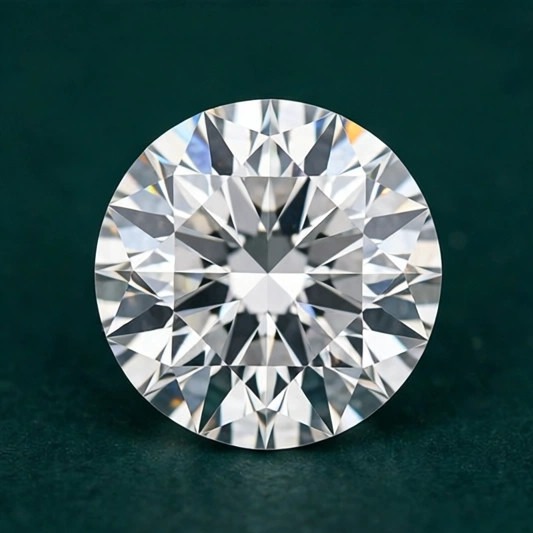
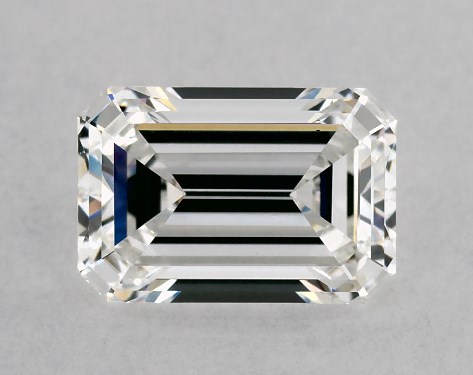
| Photo | 986,949 | 94% | Judge bow-tie, symmetry and inclusions on the real stone. |
| Cut grade | 1,044,368 | 100% | On essentially every listing - a reliable comparison field. |
| Fluorescence | 0 | 0% | Never in the retailer feeds - the certificate is the only place to check it. |
| Price-drop marker | 0 | 0% | No tracked listing currently flags a drop - compare prices yourself. |
The pattern is clear: identity, cut grades and photos are nearly universal, fluorescence never appears in a retailer feed at all, and price-drop markers are absent. A listing is a starting point. The certificate is the document of record - which is why our IGI vs GIA guide starts there too.
The order to read in
1. Certificate number and lab. This is the only field that makes two listings provably the same stone. No number, no exact comparison.
2. Carat, then shape. Price climbs with carat in steps, not smoothly, and shape changes what a carat looks like face-up. An elongated shape shows more length per carat than a round.
3. Color and clarity. These travel with the certificate. Compare them only within the same shape and stone type - a lab-grown median in this catalog is $437 per carat (IGI) while a natural GIA median is $2,120 per carat, so cross-market comparisons mislead.
4. Cut, fluorescence, and the photo. Cut is on essentially every listing, so use it freely. Fluorescence is on none of them - no retailer feed carries it - so the certificate is the only place to check it, and it can explain why two same-spec stones are priced apart. Judge the actual stone image for bow-tie and symmetry.
5. Price - per stone and per carat. Per-carat exposes size games; the raw price is what you actually pay. Check both.
The count behind the listing
One more thing a careful reader notices: 989,565 of the 1,044,861 tracked listings - about 95% - come from a single retailer, Adiamor, whose catalog dwarfs the other 12 retailers combined (55,296 listings). So when a search shows thousands of stones, you are mostly browsing one store depth. The comparisons that cut through that are same-certificate ones: Facet Wire Exact Matches currently pair 4,741 certificates across retailers, median spread $408, and the certificate search on Search takes you straight to your stone row.
Frequently asked questions
What is the most important field in a diamond listing?
The certificate number. In Facet Wire catalog captured November 4, 2026, 998,905 of 1,044,861 listings (96%) carry one. It uniquely identifies the physical stone, so the same number at two retailers is the same diamond - and Facet Wire current exact-match set of 4,741 multi-retailer certificates has a median price spread of $408 on that identical stone.
Why do two listings for the same specs show different prices?
Because specs are a summary, not the stone. Two 1-carat, D color, VS1 listings can be different stones with different cut quality and fluorescence - and sometimes they are literally the same certified stone priced differently by different retailers. The widest same-certificate example in the current set: a 3.05-carat Princess, D color, FL clarity, IGI certificate 799646609, at $3,324 at Adiamor and $14,680 at New World Diamonds.
What does it mean when a listing has no cut grade or fluorescence?
It means the retailer feed did not supply it, not that the stone has none. Fluorescence is the extreme case: zero of the 1,044,861 tracked listings list it, even though the stones graded properties exist on their certificates. Cut is the opposite - 1,044,368 listings (essentially all) carry a cut grade - and 998,905 (96%) carry a certificate number. When a field is missing on the listing, check it on the certificate itself before you compare prices.
Why does one retailer dominate the listing counts?
Adiamor accounts for 989,565 of the 1,044,861 tracked listings (about 95%), because its catalog is far larger than the other 12 retailers combined (55,296 listings). Raw counts therefore describe Adiamor inventory more than the market. Medians across retailers, and same-certificate comparisons, are the numbers to trust - which is why Facet Wire default search treats the giant feed separately.
How should I compare two diamond listings step by step?
Fix the certificate number first and search it. Then compare carat, color, clarity and cut in that order, check fluorescence and the actual stone photo or video, and only then compare price - per stone and per carat. Finish by checking the same certificate on Exact Matches, so you are comparing prices for one stone, not averages for a spec band.
Data: Facet Wire site catalog - live retailer listings tracked by Facet Wire (1,420,955 listings across 16 retailers, captured 2026-11-04). Medians exclude listings under $100 unless stated. Prices are the retailers listed prices at capture time.