FACET WIRE MARKET GUIDE
When Do Diamond Prices Drop? What 1,044,861 Listings Actually Show
Published 2026-11-04 · From live tracked listings
Everyone wants the calendar answer: buy in this month, wait for that sale. Our tracked catalog - 1,044,861 live listings across 13 retailers, captured November 4, 2026 - tells a different, more useful story. Prices do not mainly drop on schedule. They drop in three specific, measurable situations, and every one of them is visible in the data right now.
Drop one: the same stone appears cheaper somewhere else
This is the largest and most reliable drop in the market, and it is available every day. Facet Wire pairs listings by certificate number - the same physical stone, sold by more than one retailer. The current Exact Matches set holds 4,741 such certificates. The median spread between the lowest and highest price for the identical stone is $408. There are 819 spreads of $1,000 or more, and 99 spreads of $5,000 or more.
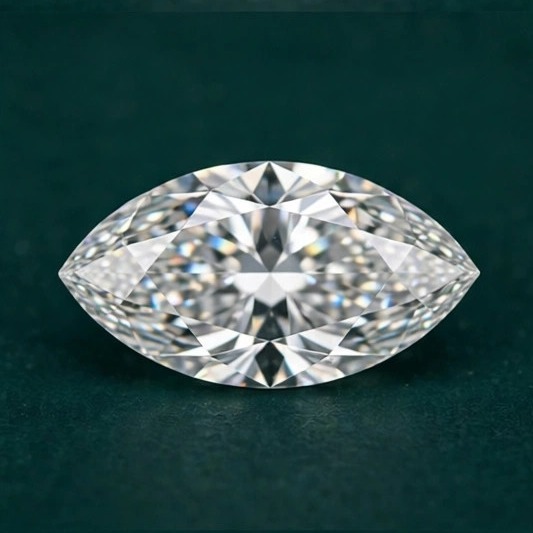
A concrete example: a 3.05-carat Princess, D color, FL clarity, IGI certificate 799646609, is listed at $3,324 at Adiamor and $14,680 at New World Diamonds - an $11,356 difference for one stone, on one day. A 3.07-carat lab-grown marquise (IGI 630443115) is $4,847 at Adiamor and $14,240 at New World Diamonds. Nobody ran a sale. The price simply depends on which store you happened to open - until you compare by certificate.
Drop two: new inventory lands on top of old listings
Retailers keep feeding the market. The November 4, 2026 pull alone added 228 newly tracked listings - 174 from MiaDonna, 27 from Frank Darling, 20 from Friendly Diamonds, 4 from VRAI and 3 from Blue Nile. Every fresh stone in a spec band is new competition for the stones already sitting there, and it is why a listing that will not move this week is worth re-checking next week. Facet Wire Price Index tracks the market direction across those pulls, and the homepage New Diamonds Pulled Today section shows the fresh intake as it lands.
Drop three: lab-grown size pricing stays almost flat
The third drop is built into lab-grown pricing itself. Take marquise, from our Marquise Diamond Guide: lab-grown medians in this catalog are $443 at 1 carat (10,617 listings), $997 at 2 carats (10,994 listings) and $1,535 at 3 carats (6,852 listings). Natural marquise medians over the same bands run $3,201, $19,832 and $44,374. In lab-grown, waiting and sizing up costs remarkably little; in natural, the same patience buys you almost nothing. If your heart is set on natural, your drop has to come from drops one and two - the same-stone spread and fresh inventory.
How to actually catch one
Pick the stone, not the sale. Save its certificate number, run it through the certificate search on Exact Matches or Search before you buy and again a week later, watch the Price Index for your shape, and sign up for Price Gap Alerts on the homepage. When a second retailer lists your certificate cheaper, that is a real, provable price drop - to the dollar, on the exact stone you wanted. That beats any calendar.
Frequently asked questions
When do diamond prices drop?
The biggest measurable drop is not a date on a calendar - it is the moment the same certified stone turns up cheaper at another retailer. In Facet Wire current exact-match set, 4,741 certificates are listed at more than one retailer with a median spread of $408 on the identical stone, 819 spreads of $1,000 or more, and 99 spreads of $5,000 or more. That gap is a price drop you can take today, without waiting for a sale.
How often do new diamond listings arrive?
Constantly. The November 4, 2026 catalog pull added 228 newly tracked listings in a single day - 174 from MiaDonna, 27 from Frank Darling, 20 from Friendly Diamonds, 4 from VRAI and 3 from Blue Nile. Fresh inventory is what pressures older listings, so a stone that looks firm this week can have new competition next week.
Do lab-grown diamond prices fall as size goes up?
Per stone they rise, but slowly, and that flatness is its own kind of drop. In the November 4, 2026 catalog, lab-grown marquise medians were $443 at 1 carat, $997 at 2 carats and $1,535 at 3 carats - tripling the size for about three and a half times the 1-carat price, while natural marquise medians went from $3,201 at 1 carat to $44,374 at 3 carats. Lab pricing rewards patience and size; natural pricing punishes both.
How can I catch a price drop on a stone I want?
Take its certificate number and watch the stone, not the spec band. Run the number through the certificate search on Exact Matches, check the Price Index for the wider market direction, and sign up for Price Gap Alerts on the homepage. When a second retailer lists your certificate - or lists it cheaper - that is your drop, and it is provable to the dollar.
Is there a best month to buy a diamond?
Our tracked data does not support a magic month, and this guide will not invent one. What the data does show, every single day, is same-stone spreads: the widest ordinary example right now is a 3.05-carat Princess, D color, FL clarity, IGI certificate 799646609, at $3,324 at Adiamor against $14,680 at New World Diamonds. Shopping the certificate beats shopping the calendar.
Data: Facet Wire site catalog - live retailer listings tracked by Facet Wire (1,420,735 listings across 16 retailers, captured 2026-11-04). Medians exclude listings under $100 unless stated. Prices are the retailers listed prices at capture time.